 By coolyou
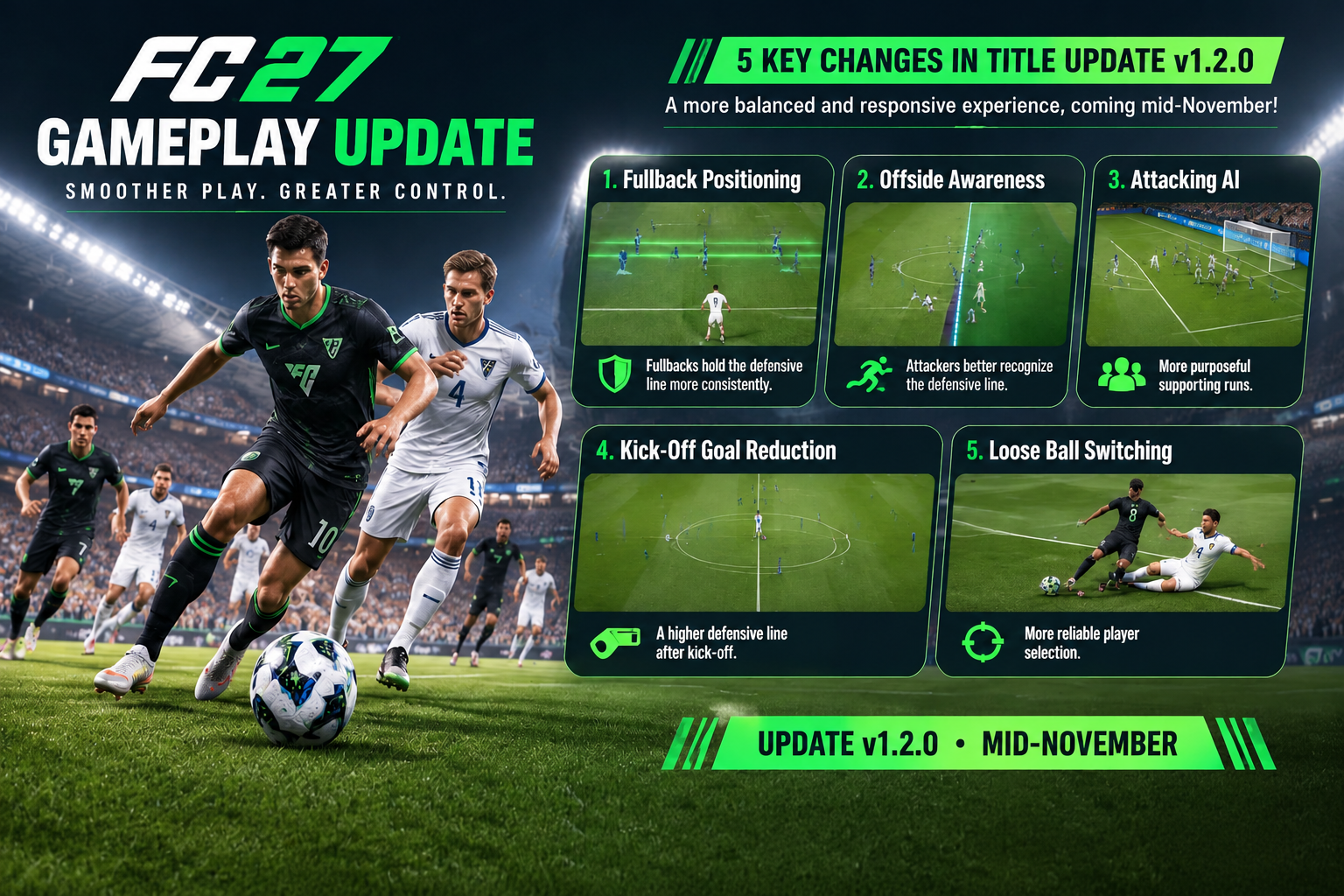
EA is preparing its first set of gameplay balance adjustments for FC 27, with five targeted changes planned for Title Update v1.2.0 in mid-November. The adjustments cover defensive positioning, attacking movement, kick-off situations, and automatic player switching. Although none of these changes represents a complete overhaul of the gameplay system, each addresses a situation that can influence the outcome of a close match. Ultimate Team managers may also revisit their squad priorities as these adjustments change the value of certain roles and attributes, making decisions about EA FC Coins more closely tied to how they want their teams to play.
Five Gameplay Adjustments Are Planned for Title Update v1.2.0
The upcoming update concentrates on five specific areas where player movement and automated decisions can produce frustrating situations. The changes are designed to make these moments less frequent while preserving the existing balance of FC 27.
| Gameplay Area | Planned Adjustment | Expected Match Impact |
|---|---|---|
| Fullback Positioning | Fullbacks will hold the defensive line more consistently | Better defensive organization and fewer unintended gaps |
| Offside Awareness | Attackers will better recognize the defensive line | More effective forward runs and improved timing |
| Attacking AI | AI-controlled attackers will make more purposeful supporting runs | Additional passing options around the penalty area |
| Kick-Off Goal Reduction | The defensive line will maintain a higher position after kick-off | Better protection against direct attacks after a restart |
| Loose Ball Switching | Automatic player selection will improve in specific situations | More reliable control after tackles, headed passes, and missed shots |
Each adjustment addresses a different part of match play. Defensive positioning determines how well a team maintains its shape, attacking awareness influences movement without the ball, and switching improvements affect how quickly players can respond when possession becomes unpredictable.
Fullback Positioning Could Bring More Stability to the Defensive Line
Fullbacks dropping too deep can create problems even when the rest of the defense is positioned correctly. A centre-back may step forward to maintain the offside line while a fullback remains several yards behind. That gap can unintentionally keep an opposing attacker onside, leaving the goalkeeper exposed to a through ball that should have been easier to defend.
EA plans to make fullbacks maintain their defensive line more consistently while still allowing them to track runs when a genuine attacking threat develops. The distinction is important because fullbacks need to respond to opponents without constantly disrupting the overall defensive structure.
The upcoming FC 27 defensive positioning changes could be particularly relevant to formations that depend on coordinated back-four movement. When defenders move forward together, they can reduce the space available for opposing forwards and make it harder for attackers to find gaps between defensive lines. More consistent fullback behavior should help support that approach.
This does not remove the need for manual defending. Players will still have to decide when to step out, when to follow a runner, and when to protect the space behind the defensive line. The improvement is aimed at reducing unnecessary movement from AI-controlled fullbacks, giving the user a more dependable defensive starting position.
Offside Awareness Could Improve the Timing of Forward Runs
A well-timed forward run can turn a routine passing opportunity into a clear chance on goal. However, attackers who move beyond the defensive line too early can waste possession, especially when the player in control needs an extra moment to find the right passing angle.
EA has refined attacking awareness so that players can better recognize the defensive line and make more effective runs while staying onside. This adjustment complements the fullback positioning improvement, but its main focus is the decision-making of attacking players rather than defensive organization.
The benefit could be noticeable during quick transitions. When a midfielder wins possession and looks for an immediate forward pass, an attacker who times the run correctly can provide a direct route towards goal. Better awareness should also help during slower build-up play, where players need to identify the right moment to accelerate rather than simply running forward as soon as space appears.
Passing decisions will remain important. A well-positioned attacker cannot create a successful chance if the ball is released too early, played behind the runner, or sent into an area occupied by defenders. The adjustment should make off-ball movement more useful, while the player controlling possession remains responsible for choosing the right pass.
Attacking AI Improvements Could Create Better Options Around the Box
Breaking down a compact defense often requires more than keeping possession outside the penalty area. When AI-controlled attackers remain in predictable positions, defenders can focus on the player with the ball and close the most obvious passing lanes. This makes it difficult to create a clear opportunity without relying on individual dribbling or a risky pass.
The attacking AI improvements are intended to make supporting runs more purposeful, particularly around the penalty area. Teammates should make better use of available space, giving the player in possession more options when approaching the final third.
A striker moving between two centre-backs can create a passing lane through the middle, while a midfielder arriving near the edge of the box may offer an alternative to a direct attack. Wide attackers can also draw defenders away from central areas through their movement. These runs are valuable even when they do not lead directly to a shot, because they can force opponents to adjust their defensive positions.
The change could benefit teams that rely on patient passing combinations rather than constant individual dribbling. However, the usefulness of each run will depend on the formation and tactical instructions being used. A narrow attacking setup requires different movement from a system built around wide players and overlapping fullbacks. Better AI movement should give these approaches more options without making every attacking pattern equally effective.
Kick-Off Adjustments Aim to Reduce Direct Scoring Threats
The moments immediately after kick-off can be difficult to defend when the back line drops too deep. An opponent may take advantage of that positioning by moving the ball forward quickly, forcing defenders to retreat before they can organize themselves.
EA plans to keep the defensive line higher after kick-off. This should create more resistance against direct attacks towards the penalty area and make it harder for opponents to progress through the center without facing defensive pressure.
The adjustment is especially relevant after conceding a goal, when the defending team has to respond to an immediate restart. A higher starting position should give defenders a better chance of challenging forward movement before an attacker reaches a dangerous area. It may also encourage the attacking side to use more deliberate passing combinations instead of relying entirely on a quick route towards goal.
The change will not make kick-off attacks impossible. Players can still exploit open passing lanes, use quick combinations, or move defenders out of position through well-timed runs. The main difference should be the amount of space available immediately after the restart, making direct progression less straightforward.
Loose Ball Switching Could Make Defensive Reactions More Reliable
Automatic player switching becomes particularly important when the ball changes direction unexpectedly. After a tackle, a headed pass, or a missed shot, the nearest defender may have only a short window to reach the loose ball. If control moves to a player who is too far away, the opponent can recover possession before the user has time to correct the selection.
EA has introduced targeted fixes for several situations where automatic switching does not select the closest player as expected. These include moments after a teammate completes a slide tackle, following a headed pass, and after a shot misses the target.
Consider a situation in which a defender makes a successful slide tackle but the ball rolls into the path of an opposing midfielder. The nearest teammate may be in the best position to challenge for possession, yet an unsuitable selection can delay the defensive response. Improving the system’s consistency should make it easier to continue defending without having to correct every selection manually.
This adjustment could also make transitions feel less interrupted. When a shot is blocked or a headed pass sends the ball into an open area, players need to react quickly to prevent the opponent from creating another chance. More reliable automatic selection should help users regain control sooner, although manual switching will remain useful when several players are competing for the same ball.
How the Five Changes Could Influence Tactical Choices
The five adjustments could affect more than isolated gameplay situations. Their combined impact may influence how players build attacks, organize their defensive lines, and respond to changes in possession.
Defensively, more consistent fullback positioning should make coordinated back-line movement easier to maintain. This could benefit teams that use a higher defensive line, provided their centre-backs and midfielders also maintain suitable positions. The kick-off adjustment addresses a different problem by giving defenders a better starting position immediately after a restart.
Attacking teams could see improvements in two important areas. Better offside awareness should make forward runs more useful, while improved supporting movement around the box could create additional passing routes against compact defenses. These changes may make structured attacking play more rewarding, particularly when players combine quick passing with well-timed movement.
Loose-ball switching has a more immediate effect on defensive control. When automatic selection becomes more reliable, users should spend less time correcting player choices and more time positioning defenders to challenge for possession. That could be especially valuable during crowded situations in midfield, where a single delayed reaction can give the opponent room to advance.
The update is therefore focused on consistency rather than a complete change to FC 27’s tactical identity. Players will still need to make good decisions, choose suitable formations, and execute their attacks with accurate timing. The five adjustments are intended to make the game’s automated systems provide more dependable support during those decisions.
Feedback from FC 27 Players will help EA determine whether the changes have improved match consistency and whether the adjustments are working as intended across different modes and tactical approaches. Once Title Update v1.2.0 arrives, defensive coordination, attacking movement, and loose-ball reactions will be the clearest areas to watch.